
Recommendations
When Headlines Become “Reality”: How Media Distorts Worldviews—and How to Reclaim a Fact-Based Mind
A modern mind lives under siege—not from reality, but from curated fragments of it. Headlines do not present the world; they present exceptions, selected for emotional impact, stripped of proportion, and broadcast as if they were the essence of life. The result is a subtle epistemological corruption: people come to treat the newsfeed as metaphysics—as though reality itself is catastrophic, unstable, and incomprehensible.
But most of reality is not breaking. It is building. It is routine cause-and-effect, incremental progress, predictable tradeoffs, and slow-moving trends. The world is usually mundane—not because nothing matters, but because most causation is gradual.
The headline fallacy: “If it’s loud, it’s typical.”
News organizations are not “lying” primarily by inventing facts; they distort by selection and emphasis. A plane crash is news; the 100,000 flights that land safely are not. A riot is news; the millions of peaceful interactions that make civilization possible are not. This creates a cognitive default: people confuse salience with frequency, and drama with importance.
In effect, the media trains people to think:
“The world is falling apart because I saw ten alarming stories this week.” “This must be how things are, because this is what I keep seeing.”
But what you keep seeing is not “what keeps happening.” It is what keeps being chosen.
The deeper error: substituting narrative for cognition
A worldview is an integration of essentials—your sense of what reality is like and what human life can be. Headlines sabotage this integration by pushing the mind toward:
contextlessness (events without trends) package-deals (one shocking story “proves” a whole theory) emotional reasoning (“I feel fear; therefore danger is omnipresent”)
A dramatic incident can be real and still be unrepresentative. Treating the extraordinary as the normal is not “being informed.” It is a form of irrationality: a refusal to weigh evidence in proportion.
“Things aren’t usually like this” is often the most accurate statement you can make
A crucial sanity-restoring perspective is recognizing: most crises are spikes on a graph, not the graph itself. If you want to understand reality, you must learn to ask:
Is this trend-based or anecdotal? What is the base rate? Compared to what? Over what time span? Is this worsening—or are we simply looking more closely?
This is not complacency. It is objectivity: the discipline of seeing facts in full context.
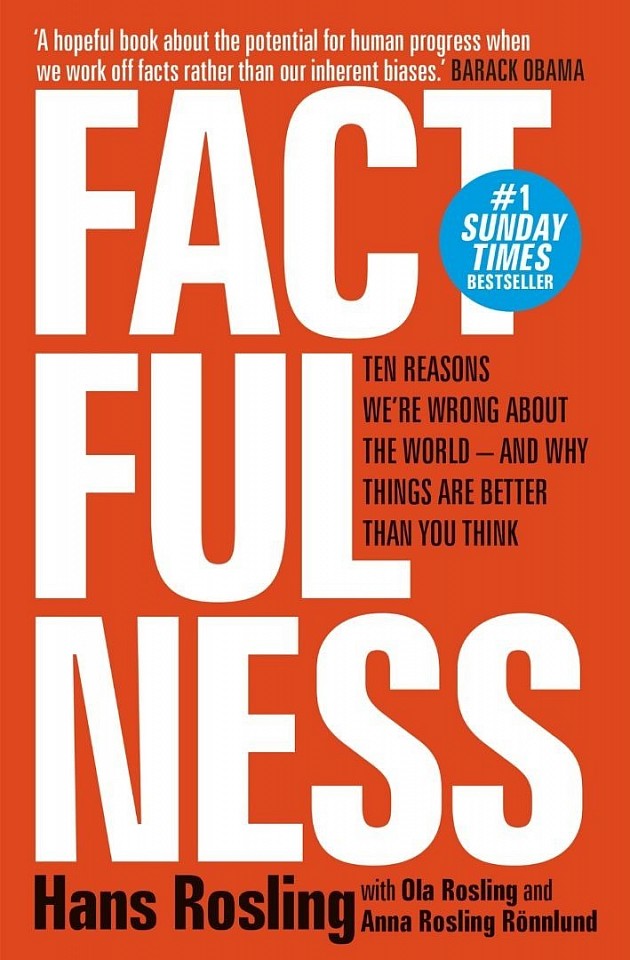
The Core Ideas and Takeaways from Factfulness (Hans Rosling)
Factfulness is a training manual in resisting worldview-distortion. It argues that many people—especially educated, influential people—hold dramatically inaccurate beliefs about global conditions because their thinking is guided by instincts and media incentives rather than integrated facts.
1) The world is not divided into “developed vs. developing”
One of Rosling’s central points is that the old two-box model (“rich West” vs. “poor rest”) is obsolete. Most people live in middle-income conditions, and many countries have changed rapidly within a generation. When you keep the old categories, you literally can’t see what exists.
Takeaway: reject false binaries. Reality is continuous and differentiated.
2) Negativity bias makes you blind to progress
Humans notice threats more than improvements. Media amplifies this by preferentially broadcasting disasters, conflict, and scandal. The result is a pervasive, learned belief that “everything is getting worse,” even when long-term measures show major improvements in health, poverty reduction, education, and child survival.
Takeaway: “worse headlines” do not mean “worse world.”
3) Most errors come from cognitive “instincts”
Rosling frames repeated thinking errors as instincts—default mental shortcuts that misfire in a complex, statistical world. Among the most important (paraphrased):
Gap instinct: seeing a huge divide where there’s a spectrum Negativity instinct: assuming decline is the norm Fear instinct: mistaking what is frightening for what is likely Size instinct: misjudging proportions (one number without context) Generalization instinct: assuming one case represents a whole category Urgency instinct: demanding immediate action without sufficient evidence
Takeaway: your mind needs method—not moods—to interpret the world.
4) “Single vivid examples” are often epistemological poison
Anecdotes feel like knowledge. But a story is not a statistic, and a shocking case is not a representative sample.
Takeaway: don’t let the concrete steal the role of the concept. Integrate.
5) The right stance is neither cynicism nor naïve cheerleading
Rosling’s posture is: the world can be bad in places and improving overall—and you need both facts at once. Progress does not mean perfection; it means possibility and direction.
Takeaway: rational optimism is earned by evidence, not demanded by faith.
Interpreting Factfulness Through an Objectivist Lens
Objectivism begins with an uncompromising premise: reality is what it is, independent of wishes, fears, or headlines. The moral and practical goal is to bring one’s consciousness into full alignment with facts, by reason.
Rosling’s project is profoundly compatible with Objectivism because it is fundamentally a campaign for:
reason over emotion context over sensation conceptual integration over floating impressions
1) Headlines as a form of “the primacy of consciousness”
When people treat the news cycle as “the world,” they are elevating consciousness (what is presented to them) over existence (what is). This is not merely a mistake; it is a metaphysical inversion: the belief that reality is made by what is spotlighted.
Objectivism rejects this utterly. Events don’t become more real because they are televised.
2) Rational optimism vs. “mood pessimism”
Objectivism does not advocate optimism as a temperament; it advocates confidence in reason—the conviction that reality is intelligible and that success is possible through thought and action.
That is what Rosling offers in the realm of social knowledge: proof that the world is not an incomprehensible nightmare, and that long-range trends can be understood, measured, and improved.
3) The benevolent universe premise
The “benevolent universe premise” (BUP) is not the claim that the world hands you victories. It is the conviction that success is possible, normal, and to be expected for a rational person—because reality is lawful and knowable, and because achievement is a matter of cause and effect, not cosmic whim.
Applied socially, Factfulness supports a cultural corollary: civilization is not a miracle—it is the product of minds at work (science, trade, medicine, technology). The more rational the method, the more progress becomes the norm.
A good way to phrase it (Objectivist-style) is:
the universe is not “friendly,” but it is open to efficacy; progress is not guaranteed, but it is achievable; despair is not realism—often it is ignorance plus emotion.
“The function of reason is not to make tragedy impossible, but to make success possible—and repeatable.”
“Benevolence is not a gift from reality; it is the recognition that reality is intelligible and that values can be achieved.”
Practical Takeaways You Can Put in Front of Your Friend
Headlines are not a sample of reality; they’re a selection for attention. Ask trend questions, not story questions. (“Over time, compared to what?”) Refuse false binaries. Most of life is gradients and mixed cases. Treat fear as a signal to investigate—not a tool of knowledge. Adopt rational optimism: confidence in facts, method, and human efficacy. Integrate: don’t let today’s drama override long-range reality.
Aphorism: The antidote to headline-induced despair is not hope—it is context.
Quoted material may be paraphrased for clarity. Refer to original sources for exact wording.
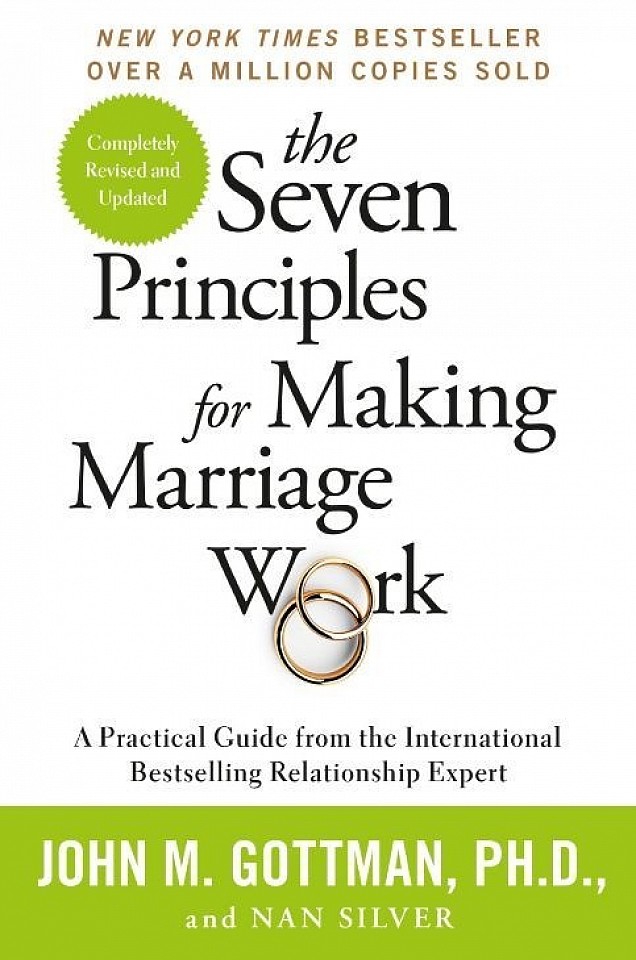
The Seven Principles For Making Marriage Work
Repair Language
I Feel
1. I’m getting scared.
2. Please say that more gently.
3. Did I do something wrong?
4. That hurt my feelings.
5. That felt like an insult.
6. I’m feeling sad.
7. I feel blamed. Can you rephrase that?
8. I’m feeling unappreciated.
9. I feel defensive. Can you rephrase that?
10. Please don’t lecture me.
11. I don’t feel like you understand me right now.
12. I am starting to feel flooded.
13. I feel criticized. Can you rephrase that?
14. I’m getting worried.
I Need to Calm Down
1. Can you make things safer for me?
2. I need things to be calmer right now.
3. I need your support right now.
4. Just listen to me right now and try to understand.
5. Tell me you love me.
6. Can I have a kiss?
7. Can I take that back?
8. Please be gentler with me.
9. Please help me calm down.
10. Please be quiet and listen to me.
11. This is important to me. Please listen.
12. I need to finish what I was saying.
13. I am starting to feel flooded.
14. I feel criticized. Can you rephrase that?
15. Can we take a break?
Sorry
1. My reactions were too extreme. Sorry.
2. I really blew that one.
3. Let me try again.
4. I want to be gentler toward you right now, and I don’t know how.
5. Tell me what you hear me saying.
6. I can see my part in all this.
7. How can I make things better?
8. Let’s try that over again.
9. What you are saying is . . .
10. Let me start again in a softer way.
11. I’m sorry. Please forgive me.
Get to Yes
1. You’re starting to convince me.
2. I agree with part of what you’re saying.
3. Let’s compromise here.
4. Let’s find our common ground.
5. I never thought of things that way.
6. This problem is not very serious in the big picture.
7. I think your point of view makes sense.
8. Let’s agree to include both our views in a solution.
9. I am thankful for . . .
10. One thing I admire about you is . . .
11. I see what you’re talking about.
Stop Action!
1. I might be wrong here.
2. Please, let’s stop for a while.
3. Let’s take a break.
4. Give me a moment. I’ll be back.
5. I’m feeling flooded.
6. Please stop.
7. Let’s agree to disagree here.
8. Let’s start all over again.
9. Hang in there. Don’t withdraw.
10. I want to change the topic.
11. We are getting off track.
I Appreciate
1. I know this isn’t your fault.
2. My part of this problem is . . .
3. I see your point.
4. Thank you for . . .
5. That’s a good point.
6. We are both saying . . .
7. I understand.
8. I love you.
9. I am thankful for . . .
10. One thing I admire about you is . . .
11. This is not your problem, it’s our problem.
