
Lifestyle Technology
The Cancer Vaccine Is More Than a Cancer Vaccine
What personalized mRNA therapy reveals about compounding technological progress
A few days ago, Merck and Moderna announced something extraordinary.
Their personalized mRNA cancer vaccine, intismeran autogene, succeeded in a Phase III trial for patients with high-risk melanoma whose tumors had already been surgically removed.
The trial enrolled 1,137 patients. The vaccine, used together with Merck's immunotherapy drug Keytruda, produced statistically significant and clinically meaningful improvements in both recurrence-free survival and distant-metastasis-free survival compared with Keytruda alone. Overall-survival data are still being collected.
Reuters described it as the first successful late-stage trial of a therapeutic cancer vaccine after more than a century of attempts. US regulatory approval could potentially come as early as 2027.
My immediate reaction was simple:
This is huge for the human race.
Not because we have suddenly "cured cancer." We haven't.
Not because this particular treatment will necessarily work against every cancer. It won't.
It matters because of what had to become possible before this treatment could exist.
The cancer vaccine is not really one technological breakthrough.
It is the product of several technological revolutions converging on the same problem.
And that is where things become interesting.
The vaccine is made from the patient's cancer
This isn't a conventional vaccine manufactured identically for millions of people.
Doctors remove a patient's melanoma and genetically sequence the tumor. They identify mutations unique to that person's cancer. Moderna then manufactures an individualized mRNA treatment encoding up to 34 of those targets.
The vaccine effectively shows the immune system:
These are the characteristics of the enemy. Find cells carrying them and attack them.
Keytruda then helps by releasing one of the biological brakes that cancers use to suppress the immune response.
So the process is approximately:
remove tumor → sequence cancer → identify mutations → select targets → manufacture personalized mRNA → train immune system → unleash immune response
The patient's biological information becomes part of the specification for manufacturing their medicine.
Twenty-five years ago, merely sequencing enough DNA to do this routinely would have been prohibitively expensive.
The US National Human Genome Research Institute estimates that sequencing a human genome cost roughly $95 million in 2001. By 2021, its tracked cost had fallen to roughly $562.
That collapse in sequencing costs did not cure melanoma.
But without it, personalized cancer vaccines of this kind become vastly harder to imagine as a scalable medical product.
That distinction is important.
Technology does not advance one invention at a time
We often think about technological progress incorrectly.
We imagine a sequence:
Invention A happens.
Then invention B happens.
Then invention C happens.
But technological civilization behaves more like a network.
A better sequencing machine makes genetic research cheaper.
Cheaper sequencing produces larger datasets.
Larger datasets improve our understanding of disease.
Better computation allows researchers to analyse those datasets.
Improved molecular biology gives them new ways to intervene.
Advances in manufacturing make those interventions reproducible.
Better clinical methods tell us which interventions actually work.
And successful interventions generate still more knowledge, capital and infrastructure for the next generation.
The output of one technological field becomes an input into another.
This is compounding technological progress.
It is similar to financial compounding, but the mechanism is different. Money produces returns which can themselves produce returns. Knowledge produces tools which make the production of further knowledge easier.
A microscope expands what scientists can observe.
A computer expands what they can calculate.
Genome sequencing expands what they can measure.
Artificial intelligence expands what they can search, model and design.
Each instrument increases the reach of the mind that built it.
Knowledge becomes machinery for producing more knowledge.
Look at what had to converge to produce this cancer vaccine
The personalized melanoma vaccine rests on at least several independent technological developments.
Genomics
We became capable of rapidly reading the mutations inside an individual tumor.
Computation
Those enormous datasets can be analysed quickly enough to identify useful candidate targets.
Immunology
Scientists learned that the immune system can recognise cancer—but that tumors develop mechanisms for suppressing the attack.
Checkpoint inhibitors
Drugs such as Keytruda learned how to remove some of those biological brakes. Keytruda is now used across numerous cancers.
mRNA technology
Rather than manufacturing a conventional drug against every possible target, mRNA provides something closer to a programmable biological delivery platform.
Change the genetic instructions and you can change what proteins the patient's cells temporarily produce.
Personalized manufacturing
Finally, the pharmaceutical system has to become capable of producing not merely millions of identical doses, but a different molecular specification for individual patients.
None of these technologies alone produces the result.
Together they create something that previously existed mainly as an aspiration:
sequence a person's cancer, manufacture instructions describing that cancer, and teach the person's own immune system what to hunt.
That is convergent technological progress operating inside a larger process of compounding progress.
This changes how we should think about the future
Whenever a major medical advance appears, there are two bad ways to react.
One is naïve extrapolation:
Cancer vaccine! Cancer is solved!
The other is reflexive pessimism:
It only works for melanoma after surgery, in combination with another drug, survival results aren't finished, manufacturing will be difficult, therefore calm down.
The first ignores reality.
The second misses the point.
Of course the limitations matter. Medicine advances through evidence, not enthusiasm.
But the significance of a technological development cannot be judged solely by asking what this particular version can do today.
We should also ask:
What does its existence tell us about the capability of the system producing it?
That is the more interesting question.
The first smartphone was not important merely because several million people could buy that particular smartphone.
The first successful reusable rocket landing wasn't important merely because one rocket survived one descent.
The first useful large language models weren't important merely because they could write emails.
Each demonstrated that a new capability had crossed a threshold.
The products that followed could then improve upon an established principle rather than having to prove the principle from scratch.
The same may be happening here.
Merck and Moderna are already testing individualized neoantigen therapies across other tumor types, including lung, bladder and kidney cancers. Researchers elsewhere are investigating related approaches in pancreatic and other cancers.
Some will fail.
In fact, one just did. BioNTech terminated a colorectal-cancer mRNA vaccine trial after an independent committee concluded it was unlikely to produce the desired survival benefit.
That is not an embarrassment to the thesis.
It is science.
Cancer is not one disease. Some tumors are much easier for the immune system to identify than others. Technologies encounter limits, experiments fail, hypotheses die and capital gets redirected.
Compounding progress does not mean every experiment succeeds.
It means that successful knowledge is retained and becomes part of the starting point for the next experiment.
Failure destroys an error.
Success preserves a capability.
Both can move knowledge forward.
The longevity implication is bigger than this vaccine
This is also why I think discussions about human longevity are often framed too narrowly.
Suppose you are in your thirties today and you want to know your chances of reaching 100 in good health.
It would be silly to ask:
"Does this melanoma vaccine mean I will live to 100?"
Obviously not.
The relevant question is:
What will medicine be capable of after another sixty or seventy years of accumulated and interacting technological progress?
Consider the portfolio.
Cancer immunotherapy.
Personalized vaccines.
Gene editing.
Earlier cancer detection.
Genomic medicine.
Artificial intelligence in drug discovery.
Protein design.
Regenerative medicine.
Organ replacement.
Robotic surgery.
Cardiovascular prevention.
Better metabolic treatments.
Neurodegenerative-disease research.
Continuous diagnostics.
None needs to produce immortality.
They only need to repeatedly remove causes of premature death and disability.
And importantly, progress in one area can accelerate progress elsewhere.
AI does not need to cure cancer directly to matter to cancer research. It can improve protein prediction, scientific search, drug design, clinical analysis and laboratory automation.
Cheaper sequencing does not need to cure disease directly. It increases the quantity of biological information available to researchers.
Better manufacturing does not discover therapies. It makes previously impractical therapies economically reproducible.
The effect is cumulative.
And sometimes it compounds.
The mistake is extrapolating from today's medicine to tomorrow's old age
A person who is 30 today will not encounter old age using 2026 medicine.
They will encounter it using the medicine of the 2060s, 2070s, 2080s and beyond.
That sounds obvious, but psychologically we rarely reason that way.
We look at today's 90-year-olds and unconsciously imagine that our own old age will involve roughly the same medical capabilities.
But someone born in 1900 who imagined old age using the medicine of 1930 would have been spectacularly wrong.
They could not simply extrapolate antibiotics, organ transplantation, statins, pacemakers, joint replacements, CT scans, MRI, minimally invasive surgery, modern oncology or intensive care from what existed around them.
Likewise, we cannot simply assume that the diseases defining old age today will retain exactly the same relationship with medicine several decades from now.
This does not establish that radical life extension will occur.
It establishes something narrower and more defensible:
Long-range longevity forecasts should include technological progress as a dynamic variable rather than holding medicine constant.
And when we receive evidence that the machinery producing biomedical progress is itself becoming more capable, our expectations should update accordingly.
This is not longevity escape velocity
There is a stronger idea sometimes discussed in longevity circles called longevity escape velocity.
The concept is that medical progress could eventually extend remaining healthy lifespan faster than aging consumes it.
Live one year, medicine adds more than one year to your expected remaining life, and theoretically you remain ahead of the curve.
We are nowhere near having enough evidence to treat that as established.
Fortunately, we don't need that claim to appreciate what is happening.
A much weaker proposition is already extremely consequential:
Biomedical technology may improve enough over the coming decades to prevent, delay or control a growing proportion of the diseases that currently kill people in old age.
That alone would profoundly change human life.
And every credible breakthrough gives us another piece of evidence with which to judge whether that trajectory is actually materialising.
Progress compounds because man does not start again from zero
There is a deeper reason technological progress behaves this way.
Knowledge is durable.
Once humanity discovers a true principle, later generations do not normally have to rediscover it from scratch.
Newton did not need to invent algebra.
Einstein did not need to rediscover Newton.
The engineers who built computers inherited centuries of mathematics, physics, metallurgy and electrical engineering.
Today's geneticists inherit molecular biology, statistics, computing and the Human Genome Project.
Moderna and Merck inherited all of it.
And the generation developing medicine in 2040 will inherit what Moderna and Merck are learning now.
Civilization is therefore capable of something an individual human being is not:
it can accumulate cognition across generations.
That accumulated knowledge becomes technology.
Technology extends human capability.
Extended capability enables new discoveries.
And new discoveries enlarge the inheritance of whoever comes next.
That is the real compounding mechanism.
So yes, I am optimistic
Not because the universe promises us progress.
It doesn't.
Not because every clinical trial will succeed.
They won't.
Not because technological history moves smoothly upward.
It doesn't.
I am optimistic because human beings possess a faculty capable of understanding reality, and because knowledge—once discovered, validated, preserved and applied—can expand our ability to act within it.
The personalized cancer vaccine is a beautiful example.
For more than a century, scientists tried to make therapeutic cancer vaccines work.
Now one has succeeded in a Phase III trial.
Not because somebody finally wished hard enough.
Because genomics improved.
Computation improved.
Immunology improved.
mRNA improved.
Manufacturing improved.
Cancer treatment improved.
And eventually those advances intersected.
That is what compounding technological progress looks like when it arrives.
The most exciting implication is not that we have reached the end of cancer.
It is that the tools with which we attack cancer are becoming more powerful—and those tools will become the starting point for whatever comes next.
The future does not owe us longer lives.
But neither should we evaluate our future as though human knowledge will stand still.
The great advantage of being alive early in a period of rapid technological progress is not any single breakthrough. It is having decades in which to benefit from the breakthroughs that build upon it.
The Meaning of Life from a Futurist Orientation
I was talking to a friend recently who seemed to feel an enormous pressure to accomplish everything within a single lifetime.
I understood the feeling, but I realized I don't experience my own life that way anymore.
The thought that occurred to me was simple:
We’re in the past.
Not metaphorically. Literally.
If I have children, and they have children, there may eventually be people sitting around a table talking about this period of my life the way I talk about my grandparents. The house I live in, the businesses I'm building, the woman I love, the things I believe, the mistakes I make—these will all belong to their family history.
To me, this is Wednesday.
To them, it is the old days.
And once I started looking at life from that perspective, mortality began to feel different.
A lifetime doesn't have to contain the whole story
There is a peculiar assumption buried inside modern ambition: that if something matters to you, you ought to accomplish it personally.
Build the great company. Write the great book. Change the culture. Become wealthy. Solve the problem. Leave your mark.
And then, before the clock runs out, somehow finish.
But many worthwhile projects are larger than a human lifespan.
Civilizations certainly are.
I would like humanity eventually to become a multi-planetary, multi-solar and perhaps one day multi-galactic civilization. I would like flourishing intelligent life originating here on Earth to continue expanding for as long as the universe permits it.
I obviously will not see that happen.
That does not make the goal meaningless to me.
It merely means I occupy an early part of the causal chain.
My job is not to reach the destination.
My job is to move the frontier.
That distinction removes a great deal of existential pressure without reducing ambition at all.
A life can be successful while leaving important work unfinished.
In fact, almost every great human achievement is unfinished.
We inherit mathematics that other people developed. Institutions other people constructed. Languages no individual designed. Technologies containing thousands of years of accumulated discoveries.
We are accustomed to saying that we stand on the shoulders of giants.
We think less often about the reverse proposition:
Someone may eventually stand on ours.
Parenthood as a Lifestyle
I do not think of having children as a discrete life event.
I think of parenthood as a lifestyle.
It is a way of structuring a life around family: raising children, teaching them, living with them, building traditions, solving problems together, watching them become adults, then watching the family expand again through grandchildren and whatever comes after.
That is the life I want.
I want a household that is alive with people I love. I want the responsibility and the noise. I want to teach children how to think, introduce them to the world, help them develop competence and character, argue with them when they are wrong, be corrected when I am wrong, watch their personalities emerge, and eventually know them as adults.
The appeal is not located at some distant endpoint.
The process itself is the life.
That distinction matters because reproduction can otherwise sound strangely mechanical, as though children are simply units added to a demographic equation.
That is not what interests me.
I want children because I expect raising them to be one of the major sources of happiness in my life.
And ideally, I want them to grow up having experienced family in much the same way: not as an obligation imposed upon them, but as something genuinely good.
If your childhood was happy, if your parents loved being your parents, if family brought affection, security, challenge, adventure, laughter and meaning into ordinary life, then having children of your own does not need to be sold to you as a sacrifice.
You have already experienced the value from the other side.
That is the kind of transmission I am interested in.
Not:
You must reproduce because reproduction is important.
But:
This was a good life. I would like to create it again.
That is why happiness matters so much to the whole project.
A miserable family cannot sustainably reproduce a philosophy of life. Children are extraordinarily good at detecting the difference between what adults preach and what their lives actually demonstrate.
If I tell my children that family is wonderful while obviously experiencing them as burdens, the lesson they learn will not be the one I intended.
So the standard is demanding.
The family itself has to work.
The children need to be wanted.
The parents need to enjoy being parents.
The household needs to be a place worth remembering fondly.
And the children need enough independence that, when adulthood comes, they can judge the whole thing for themselves.
If they eventually decide that the life they experienced is worth continuing, then reproduction becomes naturally recursive.
I raise children who enjoy being alive and who understand what made their childhood good.
Some of them may choose to build families of their own.
They raise children.
Those children make the same judgment again.
Over enough generations, the process extends far beyond anyone I will ever know.
That is where parenthood connects with my much longer view of the future.
Without descendants, the distant future is mostly populated by strangers.
With them, part of that future belongs to a causal chain in which I participated.
My children are the part of the future that I am part of.
I do not need them to preserve my name forever.
I do not need them to imitate me.
I certainly do not need them to freeze my beliefs in place.
I want something more alive than that.
I want to begin a family culture strong enough to be enjoyed, questioned, improved, adapted and voluntarily continued.
If, centuries from now, my descendants are living lives I could barely recognize but are happy to be alive and happy to keep life going, I would consider that a remarkable success.
The point is not to manufacture descendants.
The point is to live parenthood so well that continuing the family becomes an attractive proposition to the people who experienced it.
I do not want immortality by proxy
None of this means I regard descendants as a substitute for my own life.
If someone offered me five hundred healthy additional years, I would take them.
Death is still death. I lose the ability to think, experience, love, create, discover and enjoy the world. There is no reason to romanticize that.
But there is a difference between saying:
My conscious life ends
and saying:
Everything I was part of ends.
The first is unavoidable, at least for now.
The second is not.
I have gradually come to experience myself less as an endpoint and more as a link.
That does something important to mortality.
It doesn't make death good.
It makes death less like the universe erasing the whole project.
Immortality preserves the individual. Continuity preserves what the individual set in motion.
The second is available to us already.
The future is much larger than the past
There is another reason I find the future difficult to dismiss.
The universe is about 13.8 billion years old.
That sounds unimaginably ancient from the standpoint of a human lifetime.
But cosmically, it may turn out to be extraordinarily young.
Stars can continue existing for vastly longer than the universe has existed so far. Red dwarfs, the longest-lived stars we know of, may burn for trillions of years. And even that is merely the opening chapter compared with the immense timescales associated with the universe's eventual decline toward thermodynamic equilibrium.
The striking thing is not merely that the universe is old.
It is that the future may be incomparably longer than the past.
From our perspective, 13.8 billion years feels almost synonymous with eternity.
From the perspective of the universe's possible future history, we may still be astonishingly close to the beginning.
That changes the proportions of the story.
The first 13.8 billion years produced galaxies, stars, planets, chemistry, life, intelligence and eventually creatures capable of consciously asking what should happen next.
Almost everything intelligent life could ever become may still lie ahead.
We may be living not merely in our descendants' past, but in the deep past of life itself.
To imagine that our century represents something close to the culmination of history seems absurdly parochial.
We are early.
Very early.
And if life can continue adapting, reproducing and expanding, the future may contain vastly more living history than the past ever did.
The future is not somebody else's problem
If you regard yourself as merely occupying the present, the distant future can easily become politically or philosophically decorative.
Sure, humanity should probably survive.
Sure, somebody should eventually leave Earth.
Sure, civilization should remain free and rational.
But why should any of that compete with immediate concerns?
Once you begin thinking as an ancestor, the question changes.
What sort of world am I handing forward?
What assumptions am I transmitting?
What kind of people am I helping create?
What institutions am I leaving them?
What problems am I solving for them—and which ones am I carelessly creating?
I am an Objectivist, and I think of Objectivism partly as a cultural technology.
It contains a set of premises about reality, reason, individual freedom, productive achievement, rational self-interest and human happiness that I think are both true and extraordinarily useful.
But I don't particularly care whether some descendant of mine in the year 2400 calls himself an Objectivist.
I would rather he understand reality well enough to tell me exactly where Ayn Rand and I were wrong.
Loyalty to truth outranks loyalty to doctrine.
What I hope survives is something more fundamental:
a life-orientation.
The conviction that existence is worth engaging with.
That reality can be understood.
That intelligence should be used.
That happiness is an achievement worth pursuing.
That creation is better than destruction.
That life should reproduce, adapt, expand and continue.
Life should act like life
At the individual scale, this means building a life worth living.
At the family scale, it means creating happy human beings capable of building worthwhile lives of their own.
At the civilizational scale, I think the same pattern eventually requires expansion beyond Earth.
Every planet is temporary.
Every star is temporary.
Every civilization confined permanently to one location has accepted an eventual extinction date, whether its citizens think about it or not.
So I don't see space settlement merely as exploration.
I think of it as planetary reproduction.
A successful civilization should eventually become capable of producing daughter civilizations.
Earth creates settlements elsewhere.
Those settlements mature.
Eventually they create settlements of their own.
And the process continues.
Some planets, nations, empires or civilizations will inevitably backslide. They may become authoritarian, nihilistic, stagnant or simply lose the will to continue.
That is not a final failure of the whole project.
It is a local dead end.
A civilization that ceases to reproduce itself outward eventually becomes trapped on its rock. However sophisticated it once was, the clock keeps running.
Other branches can continue.
That is one reason a multi-world civilization matters so much. It does not merely provide protection from asteroids or stellar catastrophe.
It creates civilizational redundancy.
One world can stagnate without taking every other world with it.
One culture can decay while others continue experimenting, creating and expanding.
The point, however, is not expansion for its own sake.
A billion miserable planets would not constitute success.
The point is the expansion of flourishing life.
A successful civilization creates beings capable of living well and creating more successful civilizations in turn.
Planetary reproduction.
Again and again.
For as long as reality allows it.
We do not even need to remain human
I am not especially attached to the idea that Homo sapiens must remain biologically unchanged forever.
Suppose ten million years from now our descendants look nothing like us.
Perhaps they have deliberately altered their genomes.
Perhaps they have integrated machinery into themselves.
Perhaps their machines became biological.
Perhaps they encountered extraterrestrial life and somehow merged lineages.
Perhaps eventually almost none of the original human genome remains.
If there were still an uninterrupted chain from Earth-originating life to them—and they were flourishing—I would look at that civilization and think:
We made it.
I would be delighted if human genes could someday mix with alien genes.
I would not regard it as defeat if human-originated machines became the entities spreading life across the universe.
Perhaps the distinction between machine and organism will itself eventually become meaningless. Future machines might be built from engineered cells, DNA-like information systems, artificial biochemistry or technologies we currently lack the concepts to describe.
What would bother me is not transformation.
What would bother me is replacement through destruction.
If our machines wiped out living beings and then filled the universe with something indifferent to life and happiness, I would not regard their human origin as sufficient reason to call that success.
What matters is continuity of the life-orientation, not continuity of a particular biological shape.
Preserving a lineage does not require preserving its present form.
Evolution has never worked that way.
Life survives because it changes.
The alternative—protecting one biological configuration indefinitely against all transformation—would eventually become another kind of stagnation.
Humanity does not need to remain exactly human.
It needs to remain alive, intelligent, adaptive and oriented toward flourishing.
Perhaps one day even the word "humanity" will no longer adequately describe our descendants.
That is fine.
If something flourishing can trace an unbroken causal lineage back to this planet—to our biology, our minds, our culture, our creations—and continues the process outward, then something of us succeeded.
I would like my genes to remain somewhere in that chain.
I would like my ideas and influence to remain somewhere in it too.
Not because the universe owes me remembrance.
Simply because I would like to be part of what comes next.
The past is happening now
This brings me back to the thought that started all of this.
We’re in the past.
Our buildings will become ancient.
Our technologies will become curiosities.
Our political crises will become paragraphs.
Our children will grow old.
And, if things go well enough for long enough, some descendant of ours may one day stand somewhere that isn't Earth and regard our century as almost unimaginably primitive.
That person will never know me.
He doesn't need to.
I am not trying to be remembered forever. I am trying to participate in something that continues.
My conscious life will end. I would gladly avoid that if I could. But mortality does not feel like absolute termination when some of the causes I set in motion can continue beyond me.
Children can raise children. Ideas can be corrected and transmitted. Institutions can outlive their founders. Civilizations can reproduce. Life can spread beyond Earth and eventually become something we would barely recognize.
I do not need my descendants to look like me, preserve my name, or finish some plan I wrote for them.
I want to live well while I am here, move the frontier forward, and leave those who come after me better positioned to do the same.
Perhaps that chain eventually reaches other planets, other stars, other galaxies, and forms of life we cannot yet imagine.
I don't need to see the end of that story.
I want life to continue. I want it to flourish. And while I'm here, I want to too.
Getting High on Exercise and REM Sleep
There are two kinds of drugs: the ones you take, and the ones you earn.
Coffee, alcohol, and marijuana move your state by chemical leverage. Exercise and REM sleep move your state by making your biology do what it was built to do. One is borrowed energy; the other is generated energy. Borrowing can be rational—but it always comes with fine print written in sleep.
REM Sleep: the brain’s nightly integration drug
Sleep cycles through non-REM and REM (Rapid Eye Movement). REM is high brain activity, vivid dreaming, and a “safety lock” on your muscles while your mind runs simulations.
REM’s main function is integration: consolidating memory and processing emotion. When REM is consistently disrupted, waking life tends to degrade in predictable ways:
- Irritability / threat-sensitivity: less emotional recalibration
- Lower creativity: fewer novel associations, more rigidity
- More appetite / cravings: sleep loss pushes hunger and undermines satiety
- Worse trauma processing: emotional memories stay “hotter,” less digested
REM is emotional bookkeeping. Skip it and your psyche cooks the books.
Three popular drugs, three ways of stealing REM
Coffee (caffeine): “mute the sleep pressure”
Caffeine blocks adenosine (sleep pressure). You feel awake, but the need for sleep isn’t paid—only silenced. It tends to reduce sleep quality and can delay REM accumulation.
Cost: REM gets delayed/compressed.
Next day: alert, but with thinner emotional margin.
Alcohol: “sedate now, sabotage later”
Alcohol can knock you out, then fragments the second half of sleep and suppresses REM early, often followed by restless rebound.
Cost: less REM + more broken sleep.
Next day: dulled mood plus irritability.
Marijuana (THC): “thin the dream”
THC often reduces REM and dream intensity; stopping can produce REM rebound and vivid dreaming.
Cost: REM suppression while using; rebound on withdrawal.
Next day: sometimes calm, sometimes emotionally “unprocessed.”
Caffeine postpones sleep, alcohol impersonates it, THC edits it.
Exercise: the high that pays you back
Exercise gives an immediate “earned drug” effect—mood lift and calm (likely via endocannabinoids and related stress chemistry)—and it tends to improve overall sleep quality rather than wrecking it.
So exercise gets you high twice:
- Now: earned reward chemistry
- Tonight: better sleep architecture, including more coherent REM
Exercise doesn’t fake a state; it builds the organism that deserves it.
The stealth drugs: processed food and content media
Ultra-processed food
Engineered combinations of sugar/fat/salt produce unusually reliable reward hits—often driving craving and loss-of-control patterns.
Side effects: cravings, mood volatility, appetite dysregulation—worse when sleep-deprived.
If it was engineered to be irresistible, “willpower” isn’t the whole story.
Content media (short video, news feeds, porn)
These often run on variable reward loops—the slot-machine schedule for attention. They trigger dopamine-driven checking, emotion spikes, and cue-conditioning that can bend behavior away from rational self-interest.
Side effects: attention fragmentation, reactive mood cycles (news), compulsive loops (porn), reduced agency.
What you repeatedly consume becomes your default desire.
A value-consistent “drug stack”
- Exercise by day: earned calm + stronger baseline
- REM by night: integration, emotional cleanup, creative recombination
- Minimize REM thieves: caffeine late, alcohol at night, THC-as-sleep-tool
- Watch stealth drugs: ultra-processed food + algorithmic content
Choose highs that expand your agency, not ones that rent it.
Tug-of-War
Think of “tug of war” as a picture of how couples handle conflict, power, and ego—and notice that each couple defines “winning” by a different standard.
1) The couple that pulls as hard as they can
Their standard is: “I win if I get my way.”
So every disagreement becomes a test of dominance. They may “win” arguments, but they lose something more important: ease, trust, affection, and the sense that the relationship is a safe place to think and be honest.
This is war-as-a-lifestyle. Even the “winner” lives with an enemy.
2) The couple where one “lets the other win”
Their standard is: “I win if you’re not upset,” or “I win if I’m ‘good’ by yielding.”
That looks peaceful, but it’s often a slow trade of self-respect for temporary calm. The one who yields builds resentment; the one who’s indulged becomes dependent or entitled; the relationship becomes lopsided—less a partnership than a pattern.
This isn’t harmony. It’s appeasement.
3) The couple that pulls very gently
Their standard is different: “We win if we both stay on the same side—reality.”
They don’t treat conflict as a contest of wills. They treat it as a joint problem to solve.
“Pulling gently” doesn’t mean being weak or never disagreeing. It means:
- no humiliation, no escalation, no scorekeeping
- a willingness to pause, define the issue, and look for facts
- negotiating without sacrificing core values
- caring more about understanding than “defeating”
They’re happiest because they’ve changed the game. They’ve replaced force with reason—and in a relationship, reason is the only “power” that doesn’t poison love.
Why they’re the real winners
Because the real prize in a relationship isn’t control. It’s shared joy—two independent minds choosing each other, trading value for value, and making life better together.
If “winning” costs you the person, you lost. If it builds the bond, you won.
Pre-Parenting: Choosing Parenthood Before the Child Exists
Definition. Pre-parenting is the deliberate, sustained act of thinking through what it would mean to raise a child—values, responsibilities, tradeoffs, practical constraints—long before any child is conceived. It is not daydreaming about a cute future. It is a form of moral and practical planning: treating parenthood as a chosen obligation that should be evaluated with the same seriousness as any life-defining commitment.
To understand the concept clearly, we need to distinguish it from nearby ideas:
- Fantasy parenting: imagining an idealized child and an idealized self, insulated from risk and cost.
- Anxiety parenting: rehearsing fears without converting them into plans or principles.
- Pre-parenting: integrating aspirations with realities—biology, time, money, temperament, partnership, health, career, culture—then making decisions consistent with that integration.
Pre-parenting begins with a simple fact: a child is not a lifestyle accessory. A child is a developing human mind and body that will depend on you for years. If you accept that fact, then it becomes rational to consider parenthood before the moment when desire, momentum, or circumstance makes the decision for you.
The Core Question: “What am I signing up for?”
Every serious commitment has two parts: the goal and the cost. Pre-parenting forces both into view.
The goal is not merely “having a kid.” The goal is raising a person—one capable of thinking, acting, and living independently. If that is the goal, then parenting is not primarily about control or possession. It is about guidance, protection, and ultimately release: helping another person become able to run their own life.
The cost is equally real: time, sleep, money, emotional labor, conflict resolution, medical risks, unpredictable outcomes, and the permanent reorganization of priorities. Pre-parenting rejects the evasive hope that “it’ll work out somehow” as a substitute for a plan. Hope is not a method.
What Pre-Parenting Actually Thinks About
Pre-parenting is not one thought repeated obsessively. It is a structured inquiry. The most rational approach is to divide it into domains.
1) Values: What kind of adult are you trying to help create?
A future child does not begin as a blank slate, nor as a pre-written script. Temperament varies; environment matters. But values are still central because they shape the culture of the home: what is praised, what is punished, what is discussed, and what is ignored.
Pre-parenting asks:
- Do I value independence or conformity?
- Do I treat reason and honesty as non-negotiable?
- Do I want my child to fear mistakes—or to learn from them?
- Do I model what I demand?
These questions matter because children learn less from lectures than from observed causality: what actions lead to what consequences in the adults around them.
2) Competence: Can you provide stable care without resentment?
A child requires more than love. Love without competence becomes chaos with good intentions.
Pre-parenting evaluates:
- Financial stability (not luxury—stability)
- Time availability and the realism of schedules
- Emotional regulation under stress
- Health, energy, and support systems
- The willingness to repeat basics for years: meals, sleep routines, school logistics, doctor visits, supervision
The key is not perfection. The key is honesty: can you do the work consistently without turning the child into the scapegoat for a life you did not actually choose?
3) Partnership: Are the adults aligned?
If parenting is shared, misalignment is not a minor issue—it is a structural threat. Children adapt to household reality; they also suffer from it.
Pre-parenting asks:
- Do we agree on discipline and boundaries?
- Do we agree on education, religion, screens, and extended family involvement?
- How do we resolve conflict now—and will that method scale under sleep deprivation?
- What happens if one parent becomes ill, unemployed, or overwhelmed?
A couple that cannot discuss these topics calmly is not “passionate.” It is unprepared.
4) Risk: Are you prepared for non-ideal outcomes?
The sentimental picture of parenthood assumes a healthy child, typical development, and manageable challenges. Reality does not guarantee that.
Pre-parenting includes the willingness to face:
- Disability and long-term care needs
- Mental health struggles
- Learning differences
- Social difficulties and bullying
- The child making choices you would not choose
To consider these is not pessimism. It is respect for reality. And respect for reality is respect for the future child, because it reduces the odds that they will be loved only under ideal conditions.
The Psychological Temptation: Loving the Idea of a Child
Pre-parenting also confronts a subtle temptation: loving the idea of a child more than the reality of raising a person.
The idea-child is always adorable, grateful, and successful. The reality-child may be stubborn, anxious, strange, brilliant, slow, rebellious, or simply ordinary. Pre-parenting is the discipline of shifting from “What will this child give me?” to “What will I owe them?”
That shift is the moral core of the concept.
Pre-Parenting as Character Development
A striking consequence of pre-parenting is that it often improves a person before they become a parent.
If you take seriously the prospect of guiding a developing mind, you are pushed to ask:
- Do I tell the truth—even when it’s inconvenient?
- Do I handle frustration without cruelty?
- Do I rely on guilt and intimidation—or on explanation and consistency?
- Do I keep my promises?
- Do I have a life I would want a child to witness?
Pre-parenting becomes self-audit. Not in the spirit of self-loathing, but in the spirit of causal responsibility: if you will be someone’s model of adulthood, you should be worth modeling.
The Main Danger: Turning Thought into Obsession
Every virtue has a counterfeit. Pre-parenting can deform into rumination: endless analysis that never reaches conclusion, or a rigid blueprint that cannot adapt to a real child.
A rational standard is this:
Planning is good when it increases clarity and readiness.
Planning is bad when it substitutes for action or becomes a demand for certainty that life cannot provide.
The point is not to predict every detail. The point is to ensure that the decision to become a parent is chosen, not drifted into; and that the responsibilities are accepted, not discovered in panic.
A Rational Conclusion: Parenthood Should Be a Voluntary Obligation
Pre-parenting treats parenthood as what it is: a voluntary act that creates involuntary dependence in another human being. That asymmetry makes it morally serious. You can walk away from a hobby; you cannot ethically walk away from a child.
So the ultimate purpose of pre-parenting is not to create the perfect family fantasy. It is to answer, with full awareness:
- Do I genuinely want the role of raising a person?
- Am I willing to pay the costs without resentment?
- Have I aligned my life—values, habits, relationships, resources—so that a child will not be punished for my evasions?
If the answer is yes, pre-parenting is the groundwork of responsible parenthood. If the answer is no, pre-parenting is equally valuable—because it prevents a decision that would harm both parent and child.
In either case, it serves the same end: bringing choice under the rule of reason.
Glimmering, a concept from my fiancée
Glimmering: choosing the past as fuel, not as a prison
To think clearly about glimmering, we need a definition.
Glimmering is the deliberate act of remembering specific good experiences from one’s past in order to re-experience—here and now—the positive emotions connected to them. It is not escapism, and it is not denial. It is a mental action: selecting real evidence that life has contained value, then allowing that evidence to register emotionally.
This matters because happiness is not a mysterious gift that arrives uncaused. Happiness is a response to perceived value. If the mind can perceive a value in the present, it can also perceive a value that was present—and that perception can still produce joy.
1) What glimmering is—and what it is not
Memory is not merely a storage cabinet of images. It is a cognitive tool. When you remember, you are reactivating facts you once observed: a moment of competence, love, beauty, friendship, discovery, relief, laughter, or quiet peace. In glimmering, you do this on purpose.
But glimmering must be distinguished from two common corruptions of remembering:
Nostalgia as distortion. This treats the past as a fantasy land—smoother, purer, and more perfect than it was. It replaces facts with fog. That kind of remembering weakens you, because it makes the present feel like an inferior substitute for an imaginary world.
Rumination as self-harm. This is the compulsive replay of pain, failure, and humiliation, usually with the goal of “figuring it out,” but in practice it often becomes emotional self-punishment. It enlarges suffering by keeping it cognitively present.
Glimmering is neither. It is reality-based remembering of genuine goods. It does not claim “everything was better.” It claims only what is true: some things were good, and they were real.
2) Why remembering good things can create happiness now
A basic fact: emotion follows appraisal. When you judge something as valuable, you feel attraction, warmth, gratitude, pride, peace, or joy—depending on the kind of value and its context.
A memory, properly formed, contains an appraisal: this mattered; this was good; this was worth it. When you glimmer, you are not manufacturing happiness out of nothing. You are re-contacting a real value and allowing your mind to respond to it again.
This works for at least three reasons:
Integration of identity. A person is not a single moment. You are the sum of your actions and experiences across time. Glimmering tells the truth about you: you have lived through goodness; you have earned, chosen, received, or created value before. That strengthens self-trust.
Evidence against despair. In moments of discouragement, the mind tends to generalize: “Nothing good ever happens,” “I never get what I want,” “It’s always been like this.” Glimmering is a rebuttal grounded in facts. One remembered reality—clear and specific—can puncture a sweeping lie.
Renewal of motivation. Happiness is not only a pleasant feeling; it is fuel. Remembering a moment of meaning can revive the desire to pursue meaning again. The past becomes proof that effort can pay off, that connection is possible, that beauty can be found, that your choices can work.
3) The moral psychology of glimmering: gratitude without dependency
Some people distrust happiness from memory because they fear it makes them passive—like someone living on leftovers. That fear is justified only if remembering becomes an excuse to stop living.
Properly understood, glimmering is gratitude without surrender.
Gratitude is the recognition that a value has been gained. It does not require that the value be present forever. If you once stood under a wide sky after a long day and felt your mind go quiet, that value happened. If you once laughed so hard with a friend that you forgot time, that value happened. If you once built something, learned something, finished something difficult, and felt pride—that pride had a cause. The past is not a rival to the present; it is part of your life’s total reality.
Glimmering becomes unhealthy only when it carries a hidden premise: “My best is behind me.” That premise is not inherent in memory; it is a choice. And it can be rejected.
The rational premise is this: The past contains values; the future can contain new ones. Glimmering is the act of keeping the first half of that statement vivid—so you have the strength to pursue the second.
4) How to glimmer effectively: specificity, not slogans
If glimmering is to be more than sentimental self-talk, it must be concrete. Vague positivity is weak because it has no object.
A useful glimmer is specific:
- a smell (rain on warm pavement),
- a sound (a parent’s laugh, a favorite song in a car at night),
- a scene (a sunset after an exam, a kitchen conversation, a quiet train ride),
- an achievement (a finished project, a difficult conversation handled well),
- a gesture (someone showing up when they didn’t have to).
Specific memories do two things: they anchor you to reality, and they make happiness intelligible. You don’t just feel good “for no reason.” You feel good because this happened.
5) The proper place of the past in a happy life
The past cannot be relived, but it can be integrated. A life without memory is a life without continuity; it would be like reading a book with every page torn out except the one you’re on. Glimmering is the decision to keep your pages.
And there is a deeper point: remembering good things is a form of justice to your own life. If something mattered, it deserves acknowledgment. If you loved someone well, if you tried, if you created, if you learned, if you endured and still found light—those are facts. Ignoring them is not modesty; it is error.
Glimmering is therefore a rational act. It says: I will not let pain be my only historian. I will keep a clear record of what is good, because what is good is real—and the recognition of reality is the basis of any durable happiness.
Conclusion
Glimmering is not a retreat into yesterday. It is the mind reclaiming evidence that life contains value. It produces happiness now because it reactivates real appraisals of real goods. Done properly, it does not replace action; it strengthens action. It reminds you that joy is possible—because it has already been actual.
The past, in this view, is not a museum you wander through in defeat. It is a treasury of proofs: that you have been alive, that goodness has existed, and that your consciousness can recognize it. Glimmering is the quiet, disciplined art of letting those proofs brighten the present—and light the way forward.
The Straight & Narrow Path
Definition
“The straight and narrow path” is a moral-metaphorical concept describing a way of life governed by objective standards, self-discipline, and rational judgment, in contrast to paths driven by impulse, conformity, or expedience.
The phrase originates in the Biblical tradition (Matthew 7:13–14), but its meaning is not inherently mystical. It names a pattern of action, not a supernatural state.
Core Meaning
At its essence, the straight and narrow path is:
The deliberate commitment to live according to truth, despite difficulty, resistance, or cost.
It contrasts with the “wide path,” which represents ease, indulgence, and unexamined acceptance.
Logical Structure
- Reality imposes requirements
Human survival and flourishing depend on acting in accordance with facts—biological, psychological, social, and moral.
- Correct action is not automatic
Desires, fears, and social pressure often conflict with what reality requires.
- Therefore, a proper life requires discipline and judgment
One must choose actions because they are right, not because they are easy or popular.
- That disciplined alignment with reality is the “straight and narrow path.”
Key Characteristics
- Straight → Oriented toward a clear standard; not evasive, not self-contradictory
- Narrow → Excludes alternatives that violate truth; demands selectivity and restraint
- Difficult → Requires effort, thought, and often sacrifice
- Unpopular → Few choose it because most avoid sustained self-governance
What It Is Not
- Not blind obedience
- Not ascetic self-denial for its own sake
- Not conformity to tradition or authority
- Not moral rigidity divorced from reason
Any path followed without understanding is not straight—it is merely habitual.
Rational Interpretation
Stripped of religious imagery, the straight and narrow path is:
The consistent practice of rational integrity—thinking clearly, choosing deliberately, and acting in accordance with reality rather than impulse or approval.
Conclusion
The straight and narrow path is not a road imposed from outside man.
It is the logical consequence of choosing truth over comfort and principle over convenience.
Few walk it—not because it is mysterious, but because it requires thinking and responsibility.
Getting a mortgage
I. Definitions
Loan (Mortgage):
A contractual exchange in which a borrower receives capital now in return for repayment over time with interest, secured by real property.
Rationality:
The use of reason to select actions that best achieve one’s long-term values, given the facts of reality.
Long-term financial future:
A person’s sustained ability to produce, preserve, and enjoy wealth across decades—not merely short-term cash flow.
Mutual benefit:
A voluntary exchange in which all parties gain value according to their own rational judgment.
II. The Individual: Why a Mortgage Can Be Rational
Premise 1: Time is a scarce resource.
If an individual waited to purchase a home only after accumulating the full purchase price in cash, they would sacrifice years or decades of productive life, stability, and use-value.
Conclusion: Accessing capital earlier can rationally improve life outcomes.
Premise 2: Housing is both a consumption good and a capital good.
A home provides:
- Immediate use-value (shelter, stability, productivity)
- Long-term asset value (equity accumulation, inflation hedging)
Conclusion: Financing a home allows one to convert future earning power into present ownership of a durable asset.
Premise 3: A mortgage aligns payment with income production.
Most individuals earn income gradually over time, not in a lump sum.
A mortgage:
Matches cash outflows (monthly payments) to cash inflows (income)
Preserves liquidity for investment, emergencies, or productive use
Conclusion: The loan structure integrates with human earning reality rather than defying it.
Premise 4: Interest is the price of time.
Interest is not exploitation—it is compensation for:
- Risk
- Opportunity cost
- Deferred consumption by the lender
If the borrower’s rate of value gained (housing use, appreciation, stability, productivity) exceeds the cost of interest, the loan is rational.
Conclusion: Debt is rational when it increases net lifetime value.
Individual Summary
Taking a mortgage is rational if and only if:
- The borrower can reliably service the debt
- The asset aligns with long-term values
- The total cost is understood and accepted
- The loan expands productive capacity rather than constraining it
Debt is not evil. Unchosen, unexamined, or unproductive debt is.
III. The Economy: Why Mortgages Matter Systemically
Premise 1: Capital must flow to where it is productive.
Savings that sit idle produce nothing.
Mortgages:
- Channel surplus capital from savers to builders, workers, and buyers
- Convert abstract money into real infrastructure
Conclusion: Mortgages mobilize capital into tangible value creation.
Premise 2: Housing construction multiplies economic activity.
A single mortgage-backed home supports:
- Construction labor
- Materials manufacturing
- Engineering, logistics, services
- Long-term community development
Conclusion: Mortgage lending amplifies economic productivity beyond the borrower alone.
Premise 3: Predictable lending stabilizes markets.
Long-term, fixed-rate mortgages:
- Reduce volatility
- Enable planning
- Encourage investment and innovation
Conclusion: Rational credit systems increase economic coordination and resilience.
IV. Mutual Benefit: The Moral Core of Lending
A mortgage is a voluntary exchange of values across time.
The borrower trades a commitment of future income for immediate access to a home.
What the borrower gains is not merely shelter, but stability, autonomy, and the ability to integrate housing into a long-term life plan.
What is given up is the option to use a portion of future earnings elsewhere. The borrower accepts this trade because the present value of ownership exceeds the future cost.
The lender trades present capital—money that could have been consumed or invested elsewhere—for a structured stream of future payments plus interest.
The lender gains a return that compensates for time preference, risk, and opportunity cost. The lender accepts this trade because the expected return justifies the delay and uncertainty.
Society benefits indirectly but materially.
The transaction activates construction, labor, materials, legal services, and long-term maintenance.
- Capital is converted into durable infrastructure.
- Communities form around owned property.
- Economic planning becomes possible because long-term commitments replace transient arrangements.
No party is compelled. Each participant enters the agreement by rational judgment, expecting to gain. There is no transfer of value by force, no sacrifice imposed for another’s sake.
This is the defining feature of moral economic interaction:
Value is created, not redistributed.
Conclusion
Mortgage lending, properly understood, is not exploitation, dependency, or speculation.
It is a coordinated exchange in which time, capital, and effort are aligned to serve the rational interests of all participants.
That alignment—not the presence or absence of debt—is what determines whether the transaction is sound.
V. Final Integration
A mortgage, rationally chosen and responsibly managed, is:
- A bridge between present capability and future earning power
- A method of transforming income into lasting value
- A mechanism for coordinating individual goals with societal production
It is irrational only when divorced from reality—when income is uncertain, risks are ignored, or consumption replaces value creation.
Reason demands neither fear of debt nor blind acceptance of it—only clarity, calculation, and purpose.
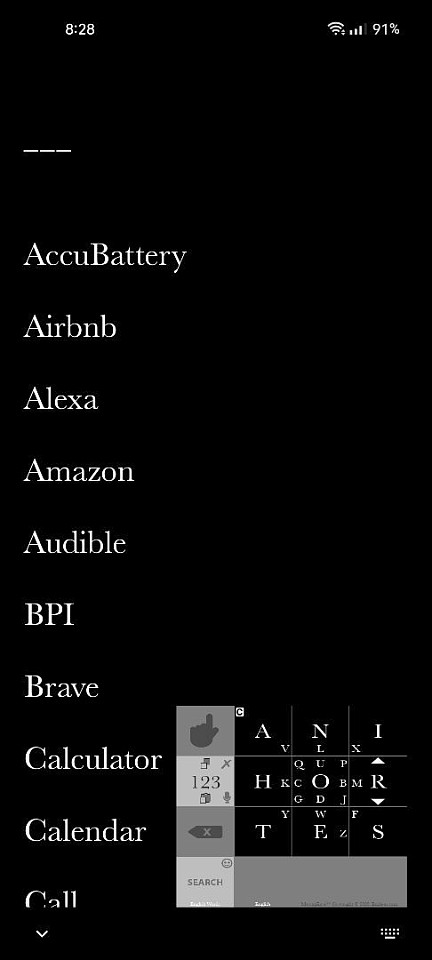
Olauncher + MessagEase
Modern Keyboard Tech Built for Glass, Not Typewriters
What MessagEase is
MessagEase is a keyboard designed for thumbs on glass, not fingers on hardware. It compresses text entry into a tight, learnable system: large targets, short motions, and consistent gestures. It’s not a “keyboard skin.” It’s a different theory of input.
Design is destiny at the scale of seconds.
The Core Value: It matches the reality of phone typing
1) QWERTY is historically inherited, not rationally chosen
QWERTY is a legacy layout shaped by typewriter constraints and desktop assumptions. On a phone it becomes an ergonomic lie: too many tiny keys, too much thumb travel, too many errors, too much correction. MessagEase feels liberating because it stops pretending a phone is a typewriter.
Value delivered: less friction, less error, less wasted movement.
Mechanical Advantages: Why it feels physically “right”
2) One-handed typing becomes reliable (especially with a PopSocket)
A PopSocket stabilizes the device; MessagEase stabilizes the typing motion. Together they create a one-handed rig: the phone is secure, and your thumb operates within a compact zone.
Result: you can type while walking, holding something, or just relaxing—without the constant micro-adjustments QWERTY demands.
3) Your thumb doesn’t need to stretch (especially for frequent letters like “a”)
QWERTY puts common letters at edges and corners on a wide board. That means repeated max-range reaches—death by a thousand stretches. MessagEase keeps high-use actions inside the thumb’s natural arc, so your typing becomes repeatable, not acrobatic.
Result: less fatigue, fewer misses, higher endurance.
Fatigue is a tax on bad geometry.
Performance Advantages: Why it becomes faster than QWERTY
4) Fewer, larger targets reduce error and hesitation
Large keys don’t just reduce mis-taps—they reduce doubt. On QWERTY, part of your brain is constantly confirming “did I hit it?” MessagEase replaces that with confident execution.
Result: speed rises because confidence rises.
5) Efficient motion beats familiar motion
QWERTY feels “easy” because it’s familiar. MessagEase becomes superior because it’s efficient. Once you internalize the map, you’re no longer navigating a grid—you’re executing learned motions. That’s why your timeline makes sense:
6) Two weeks to surpass QWERTY
That’s the signature of a better system with an upfront learning cost. QWERTY gives you instant familiarity and long-term mediocrity. MessagEase asks for adaptation and then pays you back daily.
The best tools feel difficult once—then effortless forever.
Functional Advantages: Why it keeps rewarding you over time
7) It has “depth”: features that compound, not gimmicks
You’re still discovering new ways to use it because it isn’t just text entry. It’s text control.
Tap-Drag-Go matters because it reduces mode-switching. Instead of hunting menus or fiddling with cursor handles, you stay in a continuous action loop.
Gesture-based cursor movement, selection, editing shortcuts, and symbols turn common tasks into muscle memory.
Macros / text expansion (if you use them) convert repetitive typing into single actions.
Customization lets you shape the tool to your hand, device, and preferences.
Result: the value increases with mastery; it doesn’t plateau quickly like “slightly better autocorrect.”
A tool with depth turns practice into profit.
Psychological Advantages: Why you “couldn’t live without it”
8) It creates flow and agency
MessagEase replaces “pecking at keys” with command of a system. That produces a specific kind of satisfaction: the feeling that your phone is responding to you, not negotiating with you.
Result: typing becomes less annoying, more intentional, and surprisingly enjoyable—because you’re not fighting the interface.
The Cost and the Trade
9) The price is learning; the reward is ownership
The only real downside is that it’s not socially standard and it requires retraining. But once you cross the learning threshold, switching back feels like wearing the wrong shoes: possible, but stupidly uncomfortable.
Who it’s best for
People who type a lot on a phone (messages, notes, work).
People who value one-handed operation.
Anyone who hates the thumb stretch / small key problem.
Anyone who prefers systems that reward mastery over time.
The essence
MessagEase is valuable because it’s rational input design: it trades inherited convention for ergonomic truth, then adds layers of power that keep compounding as you learn them.
Final aphorism: QWERTY is tradition. MessagEase is engineering.
Geo-Arbitrage
The core idea
Geo-arbitrage is the practice of earning income in a high-value market while living in a lower-cost geographic location, thereby increasing one’s real purchasing power without reducing productivity or quality of work.
In essence: the same rational effort, exchanged in different places, yields radically different material results.
How it works (causally)
Geo-arbitrage exploits three objective facts:
Money is contextual
A dollar has no intrinsic “standard of living” attached to it. Its value is determined by local prices.
Labor markets and living costs are not synchronized globally
Wages cluster by industry and country; costs cluster by housing, regulation, and infrastructure.
Technology breaks location-dependence
Remote work, online businesses, and global capital flows sever the tie between where you produce and where you live.
When income is decoupled from residence, geography becomes a variable you can choose, not a fate you must accept.
Common forms of geo-arbitrage
Remote employee arbitrage
Salary from a high-wage country; residence in a lower-cost one.
Business-owner arbitrage
Revenue from global markets; personal expenses in a cheaper locale.
Retirement or semi-retirement arbitrage
Fixed income stretched further by lower costs.
Domestic geo-arbitrage
Moving from high-cost cities to lower-cost regions within the same country.
The principle is identical in all cases: maximize value per unit of effort.
What geo-arbitrage is not
Not exploitation
Voluntary exchange benefits all parties. Paying market prices is not “taking advantage.”
Not escapism
Rational relocation is not “running away”; it is choosing a better context for one’s life.
Not anti-work
It presupposes productivity. Without income earned by value creation, there is nothing to arbitrage.
Objectivist evaluation
Properly understood, geo-arbitrage is a rational application of independence and reason.
It embodies:
- Independence — refusing to accept accidental geography as a life determinant.
- Rational self-interest — arranging conditions to better serve one’s long-range values.
- Productiveness — keeping or increasing output while reducing unnecessary costs.
What must be rejected is the altruist smear that portrays this choice as “unfair,” “privileged,” or morally suspect. No one is entitled to your location, income, or sacrifices.
“Man’s life requires that he act for his own sake, guided by reason, not by unchosen obligations imposed by others.”
Relationship to FIRE
Geo-arbitrage is often used to:
- Increase savings rate
- Reach financial independence sooner
- Reduce risk by lowering required income
But it is not limited to early retirement. It is equally valid for career acceleration, entrepreneurship, or creative work.
Bottom line
Geo-arbitrage is the rational selection of context.
It is the recognition that where you live is a means to your values—not a moral duty or tribal allegiance.
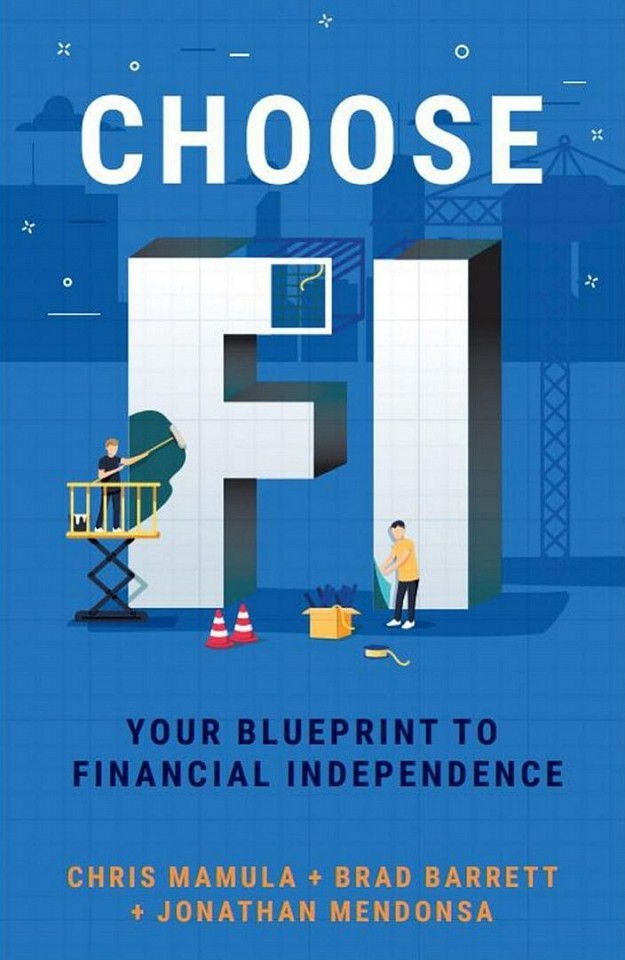
What is Financial Independence, Retire Early (FIRE)
The core idea
FIRE is a life strategy aimed at financial independence—having sufficient invested assets that your living expenses can be paid indefinitely from returns—so that work becomes optional, not compulsory. “Retire Early” does not mean permanent leisure; it means freedom of choice over how you use your time.
From an Objectivist standpoint, the moral essence is this: productive achievement in the present buys independence in the future. Money is not a mystical talisman; it is stored effort.
How FIRE works (in essentials)
High savings rate
FIRE emphasizes saving 30–70% of income by keeping expenses consciously below earnings.
Systematic investing
Savings are invested—typically in diversified equity funds—so capital compounds over time.
The independence threshold
A common rule of thumb is ~25× annual expenses invested (the “4% rule”). At that level, withdrawals can plausibly sustain spending long-term.
Optional early exit
Once independent, one may continue working, change careers, build a business, or pursue non-commercial projects—by choice.
Variants you’ll hear about
Lean FIRE – very low expenses, minimal lifestyle.
Fat FIRE – higher spending supported by larger assets.
Barista FIRE – partial independence plus enjoyable part-time work.
Coast FIRE – invest early, then let compounding do the rest while covering current expenses.
These are tactical differences. The principle is the same: control over your time through earned capital.
What FIRE is not
Not anti-work: Work is a value; coerced work is the evil FIRE rejects.
Not asceticism: Frugality is a means, not a moral end. Cutting values is irrational.
Not escapism: The goal is sovereignty over one’s life, not withdrawal from reality.
Objectivist evaluation
Properly understood, FIRE is morally legitimate and often admirable—if it is grounded in:
Productiveness: Wealth earned through value-creation, not sacrifice or guilt.
Rational self-interest: Saving and investing as long-range planning.
Independence: Freedom from the necessity to sell one’s hours under duress.
Improperly practiced, FIRE can slide into anti-achievement minimalism—treating consumption-avoidance as a virtue or regarding work itself as a necessary evil. That inversion must be rejected.
“Money is a tool of exchange—earned by the mind and effort of productive men—and it represents the power to choose one’s values.”
Bottom line
FIRE is best seen as early financial sovereignty. It is not about “retiring from life,” but about owning your time. When pursued as a consequence of rational productivity—and used to expand, not shrink, one’s range of values—it aligns fully with a life of reason, purpose, and self-esteem.
Would you like to go deeper into the math, investment philosophy, or how FIRE fits different careers?
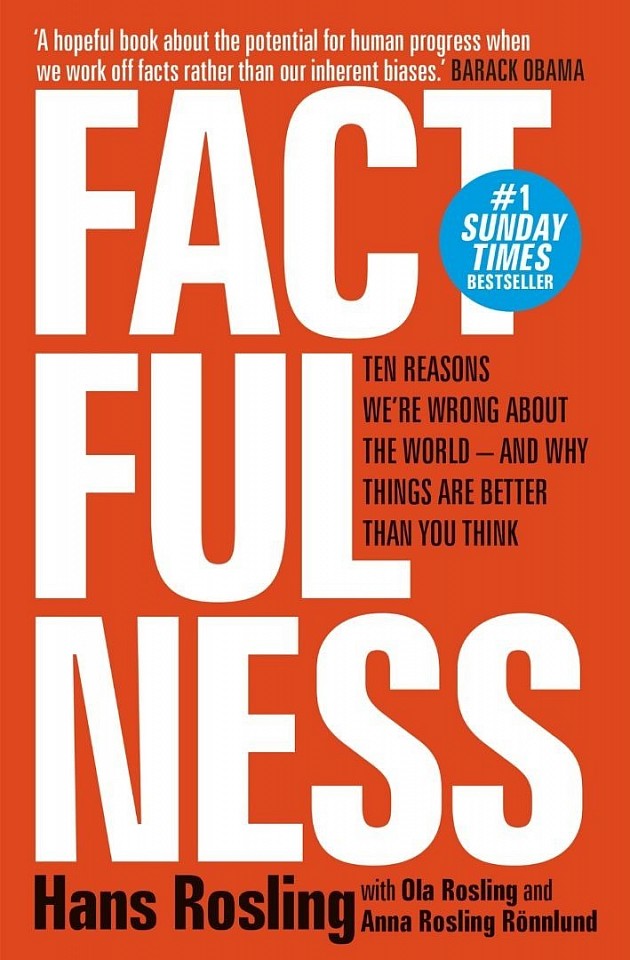
When Headlines Become “Reality”: How Media Distorts Worldviews—and How to Reclaim a Fact-Based Mind | Factfulness
A modern mind lives under siege—not from reality, but from curated fragments of it. Headlines do not present the world; they present exceptions, selected for emotional impact, stripped of proportion, and broadcast as if they were the essence of life. The result is a subtle epistemological corruption: people come to treat the newsfeed as metaphysics—as though reality itself is catastrophic, unstable, and incomprehensible.
But most of reality is not breaking. It is building. It is routine cause-and-effect, incremental progress, predictable tradeoffs, and slow-moving trends. The world is usually mundane—not because nothing matters, but because most causation is gradual.
The headline fallacy: “If it’s loud, it’s typical.”
News organizations are not “lying” primarily by inventing facts; they distort by selection and emphasis. A plane crash is news; the 100,000 flights that land safely are not. A riot is news; the millions of peaceful interactions that make civilization possible are not. This creates a cognitive default: people confuse salience with frequency, and drama with importance.
In effect, the media trains people to think:
“The world is falling apart because I saw ten alarming stories this week.” “This must be how things are, because this is what I keep seeing.”
But what you keep seeing is not “what keeps happening.” It is what keeps being chosen.
The deeper error: substituting narrative for cognition
A worldview is an integration of essentials—your sense of what reality is like and what human life can be. Headlines sabotage this integration by pushing the mind toward:
contextlessness (events without trends) package-deals (one shocking story “proves” a whole theory) emotional reasoning (“I feel fear; therefore danger is omnipresent”)
A dramatic incident can be real and still be unrepresentative. Treating the extraordinary as the normal is not “being informed.” It is a form of irrationality: a refusal to weigh evidence in proportion.
“Things aren’t usually like this” is often the most accurate statement you can make
A crucial sanity-restoring perspective is recognizing: most crises are spikes on a graph, not the graph itself. If you want to understand reality, you must learn to ask:
Is this trend-based or anecdotal? What is the base rate? Compared to what? Over what time span? Is this worsening—or are we simply looking more closely?
This is not complacency. It is objectivity: the discipline of seeing facts in full context.
The Core Ideas and Takeaways from Factfulness (Hans Rosling)
Factfulness is a training manual in resisting worldview-distortion. It argues that many people—especially educated, influential people—hold dramatically inaccurate beliefs about global conditions because their thinking is guided by instincts and media incentives rather than integrated facts.
1) The world is not divided into “developed vs. developing”
One of Rosling’s central points is that the old two-box model (“rich West” vs. “poor rest”) is obsolete. Most people live in middle-income conditions, and many countries have changed rapidly within a generation. When you keep the old categories, you literally can’t see what exists.
Takeaway: reject false binaries. Reality is continuous and differentiated.
2) Negativity bias makes you blind to progress
Humans notice threats more than improvements. Media amplifies this by preferentially broadcasting disasters, conflict, and scandal. The result is a pervasive, learned belief that “everything is getting worse,” even when long-term measures show major improvements in health, poverty reduction, education, and child survival.
Takeaway: “worse headlines” do not mean “worse world.”
3) Most errors come from cognitive “instincts”
Rosling frames repeated thinking errors as instincts—default mental shortcuts that misfire in a complex, statistical world. Among the most important (paraphrased):
Gap instinct: seeing a huge divide where there’s a spectrum Negativity instinct: assuming decline is the norm Fear instinct: mistaking what is frightening for what is likely Size instinct: misjudging proportions (one number without context) Generalization instinct: assuming one case represents a whole category Urgency instinct: demanding immediate action without sufficient evidence
Takeaway: your mind needs method—not moods—to interpret the world.
4) “Single vivid examples” are often epistemological poison
Anecdotes feel like knowledge. But a story is not a statistic, and a shocking case is not a representative sample.
Takeaway: don’t let the concrete steal the role of the concept. Integrate.
5) The right stance is neither cynicism nor naïve cheerleading
Rosling’s posture is: the world can be bad in places and improving overall—and you need both facts at once. Progress does not mean perfection; it means possibility and direction.
Takeaway: rational optimism is earned by evidence, not demanded by faith.
Interpreting Factfulness Through an Objectivist Lens
Objectivism begins with an uncompromising premise: reality is what it is, independent of wishes, fears, or headlines. The moral and practical goal is to bring one’s consciousness into full alignment with facts, by reason.
Rosling’s project is profoundly compatible with Objectivism because it is fundamentally a campaign for:
reason over emotion context over sensation conceptual integration over floating impressions
1) Headlines as a form of “the primacy of consciousness”
When people treat the news cycle as “the world,” they are elevating consciousness (what is presented to them) over existence (what is). This is not merely a mistake; it is a metaphysical inversion: the belief that reality is made by what is spotlighted.
Objectivism rejects this utterly. Events don’t become more real because they are televised.
2) Rational optimism vs. “mood pessimism”
Objectivism does not advocate optimism as a temperament; it advocates confidence in reason—the conviction that reality is intelligible and that success is possible through thought and action.
That is what Rosling offers in the realm of social knowledge: proof that the world is not an incomprehensible nightmare, and that long-range trends can be understood, measured, and improved.
3) The benevolent universe premise
The “benevolent universe premise” (BUP) is not the claim that the world hands you victories. It is the conviction that success is possible, normal, and to be expected for a rational person—because reality is lawful and knowable, and because achievement is a matter of cause and effect, not cosmic whim.
Applied socially, Factfulness supports a cultural corollary: civilization is not a miracle—it is the product of minds at work (science, trade, medicine, technology). The more rational the method, the more progress becomes the norm.
A good way to phrase it (Objectivist-style) is:
the universe is not “friendly,” but it is open to efficacy; progress is not guaranteed, but it is achievable; despair is not realism—often it is ignorance plus emotion.
“The function of reason is not to make tragedy impossible, but to make success possible—and repeatable.”
“Benevolence is not a gift from reality; it is the recognition that reality is intelligible and that values can be achieved.”
Practical Takeaways
Headlines are not a sample of reality; they’re a selection for attention. Ask trend questions, not story questions. (“Over time, compared to what?”) Refuse false binaries. Most of life is gradients and mixed cases. Treat fear as a signal to investigate—not a tool of knowledge. Adopt rational optimism: confidence in facts, method, and human efficacy. Integrate: don’t let today’s drama override long-range reality.
Aphorism: The antidote to headline-induced despair is not hope—it is context.
Media Diet
1. Definition: What Is a Media Diet?
A Media Diet is the total set of informational inputs a person regularly consumes—news, entertainment, social media, commentary, art, and education—evaluated by their cognitive and moral effects, not by popularity or intent.
Just as food affects the body, media affects cognition:
- What you attend to
- How you form abstractions
- What premises you accept
- Which values you normalize
A media diet is therefore epistemological nutrition.
2. The Standard of Evaluation (Objectivist)
Under Objectivism, the standard is man’s life as a rational being.
From this follow four non-negotiable criteria:
Reality Orientation
Does the content respect facts, causality, and identity—or does it evade them?
Conceptual Integrity
Does it clarify concepts—or blur, invert, or corrupt them?
Value Alignment
Does it uphold reason, individualism, and achievement—or sacrifice, collectivism, and ressentiment?
Psychological Effect
Does it strengthen focus, efficacy, and self-responsibility—or undermine them?
Anything that systematically fails these is unhealthy, regardless of entertainment value.
3. Healthy vs. Unhealthy Media Diets:
A. Healthy Media Diet
A healthy media diet is selective, hierarchical, and intentional.
It consists primarily of:
Fact-oriented information
- Data-rich reporting
- Primary sources
- Economic, scientific, and historical analysis grounded in causality
Conceptually rigorous philosophy
- Clear definitions
- Non-contradictory ethics
- Explicit metaphysical premises
(e.g., Objectivism)
Art that projects values
- Depicts purposeful action
- Celebrates competence, independence, achievement
- Portrays man as capable of understanding and shaping reality
Limited, deliberate recreation
- Used consciously
- Does not displace productive focus
- Does not smuggle irrational premises
Key trait:
Nothing is consumed by default.
B. Unhealthy Media Diet
An unhealthy media diet is passive, compulsive, and premise-poisoned.
It is dominated by:
Emotion-driven content
- Outrage cycles
- Fear narratives
- Victimhood framing
Anti-conceptual noise
- Sound bites
- Memes replacing arguments
- Context stripping
Moral inversion
- Success portrayed as guilt
- Failure portrayed as virtue
- Sacrifice elevated above achievement
Chronic distraction
- Infinite scroll
- Algorithmic novelty
- Fragmented attention
Key trait:
Consumption replaces thinking.
4. Consequences of Over-Consuming Unhealthy Media
Over time, the effects are predictable and lawful:
Cognitive Effects
- Reduced attention span
- Impaired abstraction
- Inability to hold long chains of reasoning
- Dependence on emotional cues over facts
Moral Effects
- Cynicism toward achievement
- Suspicion of excellence
- Acceptance of unearned guilt
- Moral paralysis (“everything is corrupt”)
Psychological Effects
- Chronic anxiety
- Learned helplessness
- Identity diffusion
- Loss of agency
Behavioral Outcome
The person becomes:
- Reactive instead of proactive
- Opinionated but incoherent
- Informed but not understanding
- Stimulated but not directed
Result: a mind crowded with content but empty of integration.
5. The Objectivist, Non-Compromise Media Diet (Contrast)
Now contrast this with a contextually strict, non-compromise, nutritious media diet.
Such a person:
Cognitively
- Maintains long-range focus
- Thinks in principles, not episodes
- Integrates new information hierarchically
- Rejects contradictions immediately
Morally
- Judges ideas by their relationship to life
- Identifies value-promoters vs. value-destroyers
- Does not grant moral sanction to irrationality
Psychologically
- Experiences clarity, not chaos
- Confidence rooted in understanding
- Emotional responses aligned with reality
Behaviorally
- Chooses media as a tool, not a habit
- Limits exposure to irrational culture
- Engages deeply rather than widely
Result: a mind that is quiet, ordered, and potent.
Final Principle
A media diet is not about information quantity.
It is about epistemological hygiene.
You cannot think clearly if you habitually consume content that treats clarity as optional.

Olauncher Home Screen
Working From Your Phone
For most people, a phone is where work goes to die.
It is the object most associated with distraction, compulsion, fragmentation, and the quiet erosion of attention. For a long time, I accepted that framing myself. The phone was something to manage, to defend against, or to escape from.
That changed when I stopped treating the phone as a temptation problem and started treating it as a tool-design problem.
Removing the Enemy, Not Fighting It
Over a year ago, I stripped my phone back to almost nothing.
I replaced the launcher with Olauncher, and for a long stretch my home screen consisted of just Kindle.
- No social feeds.
- No notification pings.
- No “just checking something quickly.”
What surprised me was not how much distraction disappeared — that part was expected — but how natural the phone began to feel again. With no cognitive landmines waiting for attention, the device stopped pulling and started responding.
The phone became quiet.
Phones Are Excellent Creation Devices — If You Let Them Be
During the holiday period, this became obvious in an unexpected way.
I started creating AI-assisted Warhammer 40k stories — text and images — entirely from my phone. Not as a compromise. Not as a fallback. As a deliberate choice.
The phone turned out to be ideal for:
- Short, focused creative bursts
- Visual iteration
- Writing without the psychological weight of a “workstation”
The absence of a keyboard did not reduce thinking so long as I was focused on creative output, not distracting input.
What emerged was a rhythm closer to sketching than drafting. More direct. Less self-conscious. More honest.
The Next Logical Step: Building a Website From a Phone
That trajectory naturally led to the current experiment: building and maintaining this site using SimDif, primarily from my phone.
Again, this is not about convenience. It is about matching tools to modes of thinking.
The phone is excellent for:
- Writing Structuring ideas
- Publishing small, complete units of thought
- Reviewing content as a reader would experience it
The computer, by contrast, I now reserve for:
- Heavy analysis
- Long-form editing
- Complex visual or structural work
- Tasks that benefit from spatial expansion
This separation matters.
Different tools encourage different kinds of cognition. Blurring them creates friction. Respecting them creates flow.
Messenger as Email (And Why Notifications Matter More Than Apps)
One of the more counterintuitive changes I made was to start using Messenger like my email.
Not by adding more messaging apps — but by removing everything else.
I turned off nearly all notifications.
I removed social apps entirely.
Messenger remained not because it is inherently better, but because it became quiet.
When notifications stop competing for attention, communication becomes intentional again. Messages are checked deliberately, responded to deliberately, and then set aside.
This principle generalizes.
The problem is not phones.
The problem is undifferentiated signals.
When every app can interrupt you, no app deserves your attention. When signals are filtered, tools regain their proper function.
The Broader Principle
What I’ve learned is simple but far-reaching:
You do not need fewer tools.
You need clearer roles for your tools.
This applies to:
- Phones vs computers
- Messaging vs publishing
- Work vs reflection Input vs creation
By redesigning how tools are used, rather than trying to rely on discipline alone, the positives of modern technology can be amplified while the negatives quietly disappear.
Not through abstinence.
Through structure.
Closing Thought
A phone can be a slot machine.
Or it can be a notebook.
The difference is not the device.
It is the system you build around it.
For me, working from my phone is no longer a compromise. It is the result of deliberately aligning tools with intention — and letting reason, rather than habit, decide how technology fits into life.
